
Chess began in northern India around the 6th century as a game called chaturanga, spread to Persia as shatranj, and slowly transformed into the modern game over more than a thousand years. The pieces we use today are direct descendants of an ancient battlefield model, reshaped by every culture that adopted it.
Chaturanga means "four divisions" in Sanskrit, referring to the branches of an ancient army: infantry, cavalry, elephants, and chariots. Those four divisions became the pawn, knight, bishop, and rook, so the modern board still reflects the structure of an army from over 1,400 years ago. The king and his adviser completed the set.
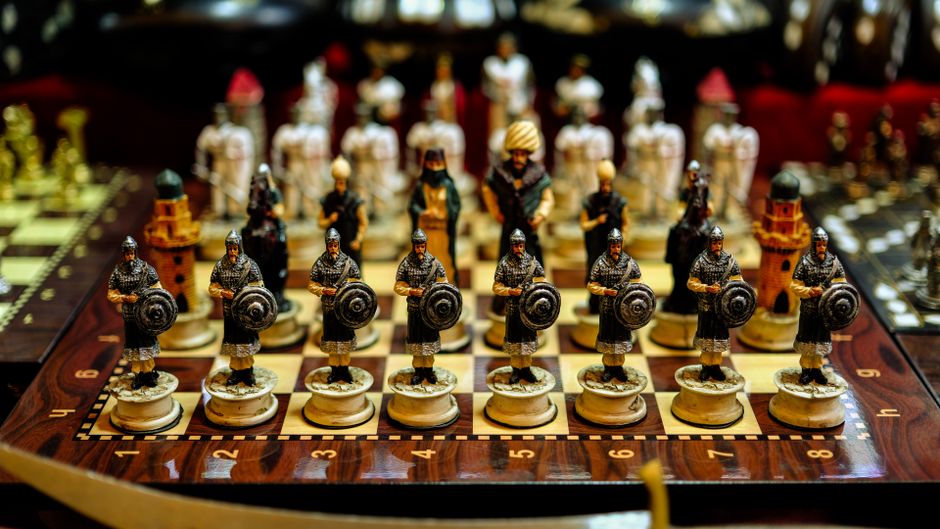
From India to Persia
When the game reached the Persian Empire, it took the name shatranj, and the pieces were renamed in Persian. The king became the shah, and the phrase "shah mat," meaning the king is helpless or defeated, is the root of the English word "checkmate."
Shatranj kept most of chaturanga’s structure but was a far slower game than modern chess. Several pieces moved weakly by today’s standards:
- The counselor (fers), ancestor of the queen, moved only one square diagonally.
- The elephant (alfil), ancestor of the bishop, jumped exactly two squares diagonally.
- The pawn had no two-square opening move.
- There was no castling, so kings stayed exposed longer.
Because the strongest pieces moved so slowly, shatranj games developed gradually, and players prized carefully worked-out endgames. Composed puzzles called mansubat, showing forced wins, were popular and were among the earliest recorded chess problems.
The Islamic Golden Age
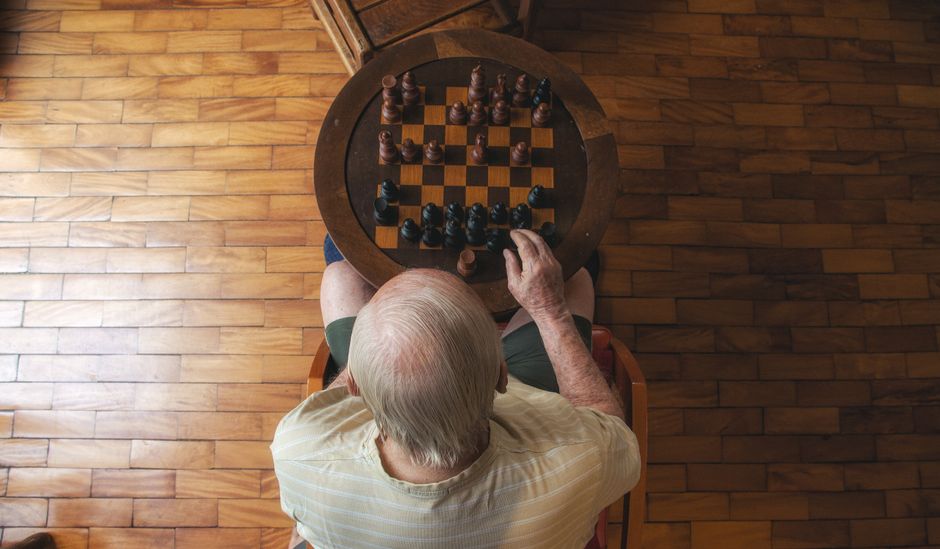
As Islam spread, shatranj traveled with it across the Middle East, North Africa, and into Spain. The game flourished during the Islamic Golden Age, when scholars wrote the first serious chess literature.
The strongest players of that era were called aliyat, roughly equivalent to grandmasters. They studied openings, recorded games, and debated theory in ways that would feel familiar to a modern player. The Islamic world preserved and developed chess theory for centuries, keeping the game alive and sophisticated before it reached medieval Europe.
The abstract, geometric pieces used across much of the world today trace back to Islamic craftsmanship, since some traditions discouraged realistic figures, favoring stylized shapes instead.
Chess Arrives in Europe
Chess entered Europe through several routes, most importantly through Moorish Spain and through trade and travel around the Mediterranean, by roughly the 10th century. Europeans adapted the pieces to their own society, and the counselor beside the king became the queen, while the elephant became the bishop.
The game spread through the nobility and the church. It appeared in poetry, legal texts, and morality treatises, sometimes used as an allegory for social order. For several centuries, though, Europeans played essentially the slow shatranj rules inherited from the East.
| Piece | Chaturanga origin | Shatranj name | Modern piece |
|---|---|---|---|
| Foot soldier | Infantry | Baidaq | Pawn |
| Horse | Cavalry | Faras | Knight |
| Elephant | War elephant | Alfil | Bishop |
| Chariot | Chariot | Rukh | Rook |
| Minister | Counselor | Fers | Queen |
| King | King | Shah | King |
The Great Rule Change
The single biggest transformation came in Europe around the late 15th century, most likely in Spain and Italy. The weak counselor was replaced by the powerful modern queen, able to move any distance in any direction, and the bishop gained its long diagonal range.
This new version was so much faster and more aggressive that it was sometimes called "mad queen chess." Empowering the queen turned a slow, methodical game into a sharp, tactical one, and this late-medieval reform created chess essentially as we play it now. Castling and the pawn’s two-square first move soon followed, standardizing over the next century or two.
The change had a practical effect. Games became shorter and more decisive, opening theory grew in importance, and the fast attacking style that defines modern chess became possible. Every game played today rests on that European reform.
Toward the Modern Game
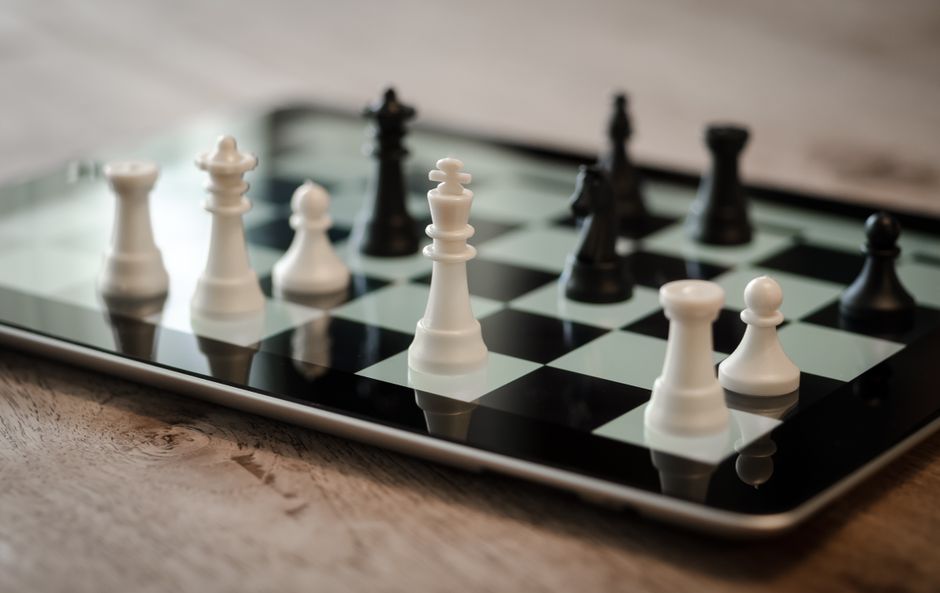
By the 19th century, chess had standardized rules, organized competition, and a growing professional class. The first modern international tournament took place in London in 1851, won by Adolf Anderssen, and the first widely recognized world champion, Wilhelm Steinitz, emerged in 1886.
The final piece of standardization was the equipment itself. The Staunton chess set, introduced in 1849, gave players a clear, consistent design that remains the tournament standard today. Before it, piece styles varied so much that players sometimes struggled to read an unfamiliar set.
Several threads came together to produce the modern sport:
- Standard rules agreed across nations through FIDE, founded in 1924.
- Standard equipment in the Staunton pattern.
- Recorded theory built on centuries of accumulated knowledge.
- Organized titles and ratings to measure and rank players.
Legends of the Game’s Invention
Chess accumulated colorful origin legends as it spread, even if history points to a gradual development rather than a single inventor. The most famous tale involves a sage who invented the game for a king and asked for payment in grains of wheat, doubled on each of the 64 squares.
The king agreed, not realizing that doubling across 64 squares produces an astronomical number of grains, more than the whole kingdom could grow. The story is a lesson about exponential growth, and its enduring popularity shows how deeply chess embedded itself in the cultures that adopted it.
These legends are myths rather than history, but they reveal how special the game seemed to those who played it, worthy of tales linking it to kings and sages. The truth is a slower, richer story of adaptation.
A Game Shaped by Every Culture It Touched
Chess is unusual among games for how clearly it carries its history. Its pieces still name an ancient Indian army, its most famous term comes from Persian, its problem tradition grew in the Islamic world, and its decisive modern form was forged in Renaissance Europe.
That layered inheritance is part of why the game feels universal. No single culture invented chess as we know it; each one that adopted it left a mark. From chaturanga’s four divisions to the empowered queen of the 15th century, the game we play today is the sum of more than 1,400 years of steady reinvention.